The Homefront Advantage: How Southern Factories Are Cutting the Cord on Overseas Production
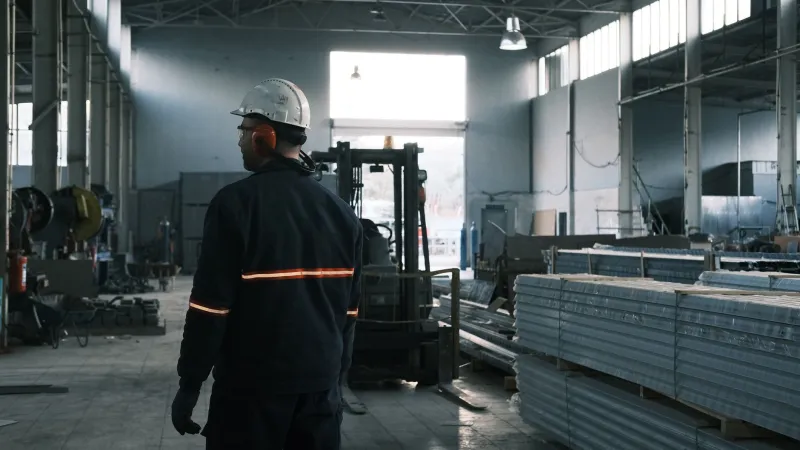
There's a saying down here that's older than most of the machinery running in these shops: if you want something done right, do it yourself. For decades, that wisdom got shelved somewhere between a quarterly earnings report and a container ship headed out of Shenzhen. But the tide — real slow at first, then all at once — has started turning back.
Across the South, manufacturers are making serious moves to pull production back onto American soil. Not as a PR stunt. Not because some consultant told them it would look good on a press release. They're doing it because the alternative nearly broke them.
When the Supply Chain Cracked
Ask any manufacturer who lived through 2020 and 2021 what those years felt like, and you'll get a look somewhere between exhausted and angry. Raw materials stuck at ports. Lead times stretching from weeks into months. Customers calling every day. Orders piling up with no end in sight.
"I had contracts I couldn't fulfill," says Dale Hutchins, who runs a mid-sized metal fabrication shop outside Huntsville, Alabama. "Parts I needed were sitting on a boat somewhere in the Pacific, and I had no idea when — or if — they were coming. That's when I made up my mind. Never again."
Hutchins isn't alone. According to a 2023 report from the Reshoring Initiative, the South accounted for a disproportionately large share of domestic manufacturing announcements over the past three years, with states like Tennessee, Georgia, and South Carolina leading the charge. The region's combination of lower operating costs, right-to-work labor laws, and deep infrastructure investment has made it a natural landing pad for companies pulling work back stateside.
Geopolitics Changed the Math
It wasn't just COVID. The broader geopolitical picture has manufacturers rethinking long-held assumptions about global supply chains. Rising tensions with China, the war in Ukraine, and instability across key shipping lanes have introduced a level of risk that no spreadsheet can fully account for.
"There used to be this thinking that cheap labor overseas always penciled out," says Dr. Renee Caldwell, an economist at Auburn University who studies regional manufacturing trends. "But when you start factoring in freight costs, tariffs, intellectual property risk, and the very real possibility of a supply disruption, the calculus changes fast. Domestic production — especially in the South — is a lot more competitive than people give it credit for."
Caldwell points to the defense and firearms sectors as early movers in the reshoring conversation. Companies supplying components for weapons systems, ammunition, and tactical gear have faced mounting pressure — from both the market and the federal government — to source domestically. That pressure has rippled outward into adjacent industries.
Jobs That Stick Around
One of the most tangible outcomes of this reshoring push is job creation — and not the temporary, low-wage kind that evaporates when the next economic headwind blows through. These are skilled trades positions: machinists, welders, quality control technicians, CNC operators. The kind of work that builds careers and communities.
In Rogersville, Tennessee, a precision components manufacturer recently reopened a facility that had been dark for nearly a decade. Within eighteen months of reopening, it had hired over 200 workers, most of them local. Starting wages averaged well above the county median. The waiting list for open positions stretched into the hundreds.
"People want to work," says plant manager Terri Bowman. "They want good-paying jobs close to home. They don't want to have to move to some big city to find something worth doing. When we opened those doors back up, the community showed up."
That sentiment echoes across the region. Local officials in manufacturing-heavy counties describe the economic multiplier effect as significant — each factory job supporting multiple additional positions in retail, services, and infrastructure.
The Competitive Edge Nobody Expected
Here's the part that surprises people who haven't been paying attention: reshoring isn't just about survival. For a growing number of Southern manufacturers, bringing production home has become a genuine competitive advantage.
Speed to market is one factor. When your supply chain runs through a facility two counties over instead of halfway around the world, you can respond to customer needs in days rather than months. Quality control is another. Hands-on oversight of the production process means fewer defects, tighter tolerances, and a finished product that actually meets spec.
Then there's the brand story. In markets where "Made in America" carries real weight — outdoor gear, firearms components, tactical equipment, agricultural tools — domestic production isn't just a logistical decision. It's a marketing asset. Customers who care where their products come from are willing to pay for the assurance, and Southern manufacturers are learning to tell that story with confidence.
"We put 'Made in the USA' on everything we ship," says Marcus Teel, who co-owns a small-arms parts manufacturer in Gadsden, Alabama. "And I'll tell you what — it matters to our customers. They ask about it. They want to know the people making their parts are Americans working good jobs. That means something."
What Needs to Happen Next
The momentum is real, but the people doing the work are clear-eyed about what it'll take to sustain it. Workforce development sits at the top of nearly every manufacturer's wish list. The skilled trades gap — a shortage of qualified machinists, welders, and technicians — is a persistent drag on growth.
State and local governments have responded with expanded vocational training programs and community college partnerships, but manufacturers say the pipeline still isn't producing enough qualified workers fast enough. It's a solvable problem, but it requires sustained commitment from schools, employers, and policymakers working in the same direction.
Infrastructure investment, regulatory clarity, and consistent energy policy round out the list of priorities that Southern business owners raise when asked what would accelerate the reshoring trend.
"We're not asking for handouts," Hutchins says. "We're asking for a level playing field and a government that doesn't make it harder to build something here than it already is. Get out of the way and let us work."
Built to Last
The South has always known how to make things. From the iron foundries of Birmingham to the shipyards of Pascagoula to the textile mills that defined entire generations, this region has manufacturing in its bones. What's happening now isn't a revolution so much as a return — a recognition that the shortcuts taken over the past few decades came with costs that are only now being fully tallied.
The companies bringing production home aren't doing it because it's easy. They're doing it because it's right — right for their businesses, right for their workers, and right for the communities that depend on them. That's a Southern value if there ever was one.
And out here, values tend to stick.