Don't Let Them Pave Over Our Hunting Heritage: A Call to Stand and Preserve What Matters
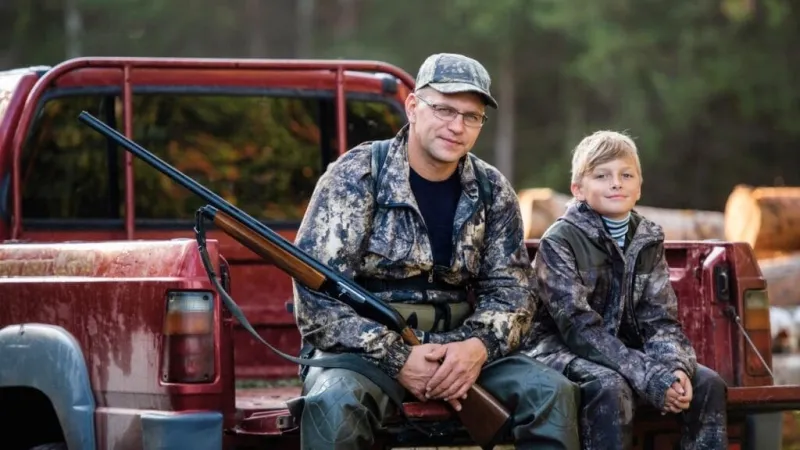
Photo: Southern hunters father son deer hunting woods sunrise tradition, via viral-chatter.com
I want you to think about the first time someone took you hunting. Maybe it was your grandfather, rising before dawn, moving quietly through the dark to get to a deer stand before first light. Maybe it was your dad teaching you to call turkey in the Mississippi bottomlands, or your uncle walking you through safe firearm handling on a quail lease in South Georgia. Whatever that memory looks like for you, I'd bet it's one of the most vivid and meaningful of your life.
Now ask yourself: will the next generation have that same opportunity?
That's not a rhetorical question. It's one that every hunter, landowner, and conservationist in the South needs to be sitting with right now, because the forces working against traditional hunting heritage are real, they're organized, and they don't take days off.
What's Actually at Stake
Southern hunting culture isn't just about harvesting game. It never has been. It's about land stewardship. It's about understanding ecosystems in a way that no classroom can teach. It's about the transfer of knowledge between generations — how to read sign, how to manage a food plot, how to identify which animals to take and which to pass so the herd stays healthy for years to come.
These aren't primitive practices. They are, in many cases, more sophisticated and more effective than what government wildlife management programs implement on a bureaucratic schedule. Hunters who have worked the same land for three or four generations carry an intimate ecological knowledge that biologists with textbook credentials are only beginning to formally recognize.
Traditional practices like selective culling, habitat rotation, prescribed burning for land management, and cooperative deer management among neighboring landowners have sustained healthy game populations across the South for well over a century. They work because they're rooted in direct observation and long-term investment in the land.
The Threats Are Real and They're Multiplying
Let's be honest about what's coming at us from multiple directions at once.
Urban sprawl is consuming Southern hunting land at an alarming pace. Subdivisions and commercial developments are replacing timber tracts and family farms that once provided prime habitat for whitetail, turkey, and small game. As land gets carved up, the critical mass needed for sustainable game management shrinks. Lease prices skyrocket. Access for working-class hunters — the backbone of Southern hunting tradition — gets squeezed out.
At the same time, regulatory creep from state and federal agencies continues to chip away at traditional practices. Some of these regulations are well-intentioned but poorly designed, written by people with limited real-world hunting experience who rely too heavily on models and not enough on the knowledge of the people actually working the land. Others feel less like wildlife management and more like cultural management — quiet efforts to make traditional hunting harder, more expensive, and less accessible.
And then there's the cultural pressure. Major media, entertainment, and educational institutions increasingly treat hunting as something to be looked down on, if not actively opposed. Children growing up in urban and suburban environments are being raised with no connection to where their food comes from or what responsible land stewardship looks like. That disconnection is by design in some quarters, and it has long-term consequences for both conservation funding — which depends heavily on hunting license sales and excise taxes — and for the political will to protect hunters' rights.
Dr. Samuel Pruitt, a wildlife biologist who has worked across the Southeast for over two decades, put it bluntly: "When you lose the cultural transmission of hunting knowledge, you don't just lose hunters. You lose the most effective and most motivated conservation force this country has ever produced."
Responsible Hunters Are the Original Conservationists
It's worth saying loudly and clearly, because it gets drowned out too often: hunters are conservationists. Not in spite of what they do, but because of it.
The North American Model of Wildlife Conservation — arguably the most successful wildlife management framework in the world — was built on the backs of hunters. The Federal Aid in Wildlife Restoration Act, known as the Pittman-Robertson Act, has channeled billions of dollars into habitat restoration and wildlife management since 1937, funded almost entirely by excise taxes on firearms and ammunition. Hunters fund conservation. Full stop.
In the South specifically, organizations like the Quality Deer Management Association (now the National Deer Association), Ducks Unlimited, and the National Wild Turkey Federation have done extraordinary work preserving habitat, restoring populations, and educating the next generation of hunters. These aren't fringe groups. They're serious conservation organizations doing serious work, and they deserve far more credit than they typically receive in the mainstream conversation about environmental stewardship.
Southern hunters also tend to operate with a personal ethics code that goes beyond what any regulation requires. The concept of fair chase, respect for the animal, utilizing as much of the harvest as possible, and leaving the land better than you found it — these aren't slogans. They're lived values passed down through exactly the kind of generational teaching that's now under threat.
What We Can Do Right Now
Preservation doesn't happen by waiting for someone else to act. Here's where to start:
Get involved in your state wildlife agency's public comment processes. When new regulations are proposed, hunters need to show up — in numbers, with specific knowledge, and with unified voices. Agency biologists and administrators respond to organized, informed advocacy.
Support land conservation efforts. Conservation easements, hunting leases that prioritize habitat management, and land trust partnerships all help keep hunting land in productive use rather than under a bulldozer. Organizations like the Southern Forests for the Future initiative are doing critical work on this front.
Bring someone new into the field. The single most powerful thing you can do for the future of Southern hunting heritage is introduce a young person to it. Programs like Becoming an Outdoors-Woman and various state-run youth hunting days are great entry points, but nothing replaces a personal invitation from someone they trust.
Vote like it matters, because it does. State wildlife commissions, land use policies, and hunting regulations are all shaped by elected officials and the people they appoint. Know where your candidates stand before you pull the lever.
The Thread Must Hold
Southern hunting heritage is worth fighting for — not just because it's tradition, but because it works. It produces healthy wildlife populations, healthy ecosystems, and healthy communities. It connects people to the land in a way that fosters genuine stewardship rather than abstract environmentalism.
We didn't inherit this land from our ancestors. We're borrowing it from our children. Let's make sure we hand it back to them with a rifle in their hands, a dog at their side, and a lifetime of mornings in the field still ahead of them.
Built South. Built Tough. Built Right. That applies to more than gear — it applies to the life we're fighting to preserve.