Range Elders and Rifle Smoke: The Living Tradition Southern Gun Clubs Are Fighting to Keep Alive
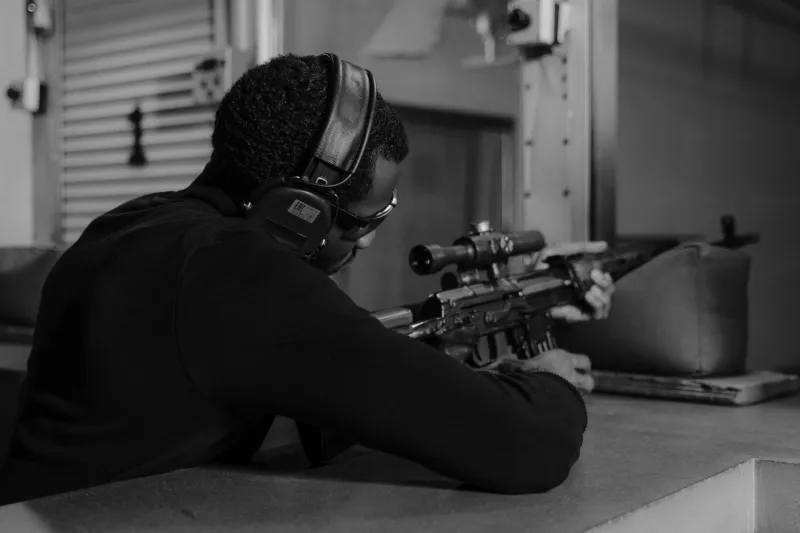
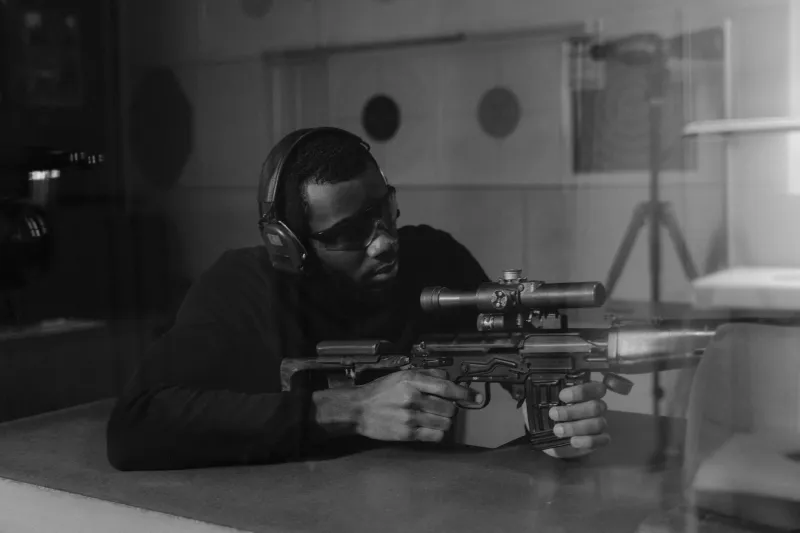
On a Saturday morning in early October, the air at the Longleaf Rifle and Pistol Club outside Brewton, Alabama smells like burnt powder and pine sap. A retired schoolteacher named Earl Hutchins — sixty-seven years old, sun-creased, wearing a faded cap from a seed company that went under in the nineties — is standing behind a teenage boy who is doing everything wrong.
His grip is too loose. His stance is wide open. And he's got his finger inside the trigger guard before the gun is even pointed downrange.
Earl doesn't raise his voice. He just puts a hand gently on the boy's shoulder and says, "Son, we're gonna back up a step."
That moment — unhurried, unscripted, and quietly firm — is exactly what makes places like Longleaf irreplaceable. And it's exactly what's at risk of disappearing.
More Than a Place to Shoot
Ask anyone who grew up around a Southern gun club what the range meant to them, and you'll get answers that have nothing to do with targets or trophy scores. You'll hear words like belonging, discipline, respect. You'll hear stories about old men who never raised their voices but somehow made you feel the full weight of every rule they laid down.
These clubs — hundreds of them scattered across Georgia, Mississippi, Tennessee, the Carolinas, and beyond — have functioned for generations as something the formal firearms training industry has never quite been able to replicate: informal academies built on personal accountability and community trust.
The curriculum isn't written down anywhere. It lives in the people.
"There's no pamphlet for what gets passed on out here," says Darlene Fitch, who has run the membership desk at the Red Hills Shooting Club in Thomasville, Georgia for going on twenty-two years. "The older guys show the younger guys. The younger guys watch. And eventually they start showing somebody else. That's the whole system."
It sounds simple. In practice, it's remarkably effective.
The Rules Nobody Argues With
Every gun club has posted rules. Four universal firearm safety principles, range commands, cease-fire procedures — standard stuff you'd find at any organized range in the country. But what separates a healthy Southern club from a basic shooting facility is the social architecture built around those rules.
At Longleaf, the older members call it "the culture." You earn the right to speak on the firing line by demonstrating you already know how to behave on it. New members — regardless of age or shooting experience — spend their first few visits mostly listening. Range masters and senior members aren't elected or certified by some outside body. They're recognized by the club community over years of demonstrated judgment.
"I've seen guys come in here with fancy gear and paper credentials who had to be corrected three times before lunch," says Hutchins. "And I've seen sixteen-year-old farm kids who needed to be told exactly once. The certificate doesn't tell you much. The way somebody handles a firearm when they think nobody's looking — that tells you everything."
That kind of observational culture — where behavior is noticed, contextualized, and gently corrected within a web of relationships — is something that formal training programs, no matter how well-designed, struggle to replicate in a weekend course.
What the Young Ones Say
Twenty-three-year-old Marcus Webb started shooting at the Red Hills club when he was eleven, dragged along by his grandfather on Sunday afternoons. He's now one of the club's most reliable junior instructors, volunteering time on weekends to work with new young members.
"When I was a kid, I didn't learn firearm safety because somebody read me a list," he says. "I learned it because I watched how the men I respected handled guns. And I wanted to be like them. That's powerful in a way that a classroom just isn't."
Marcus is quick to say he values formal training — he's taken several certified courses as an adult. But he draws a clear line between learning mechanics and learning culture.
"A course can teach you trigger control. It can't teach you what it means to be the kind of person who never has to be told twice. That comes from being around people who already are that person."
The Quiet Crisis
For all their value, these clubs are under pressure from multiple directions. Average membership age is climbing at clubs across the region. Rural land is getting harder to hold onto as property values rise and heirs sell off inherited acreage. Liability insurance costs have spiked in recent years, straining budgets that were already lean. And recruiting younger members — especially in communities where the outdoor culture has weakened over a generation — is a constant uphill effort.
Several clubs that were active a decade ago have already closed. Others are operating on thin margins and thinner rosters.
"We've lost three clubs within driving distance of here in the past eight years," says Fitch. "When a club closes, the land is gone, sure. But what you really lose is the people network. That's not something you can just restart somewhere else."
The institutional knowledge — the unwritten code of conduct, the quietly enforced norms, the relationships between older and younger shooters — doesn't transfer automatically. It has to be rebuilt from scratch, and that process takes decades.
What's Worth Saving
There's a conversation happening in some corners of the Southern shooting community about how to document and preserve what these clubs carry. Some have started mentorship programs that pair long-time members with newer ones. A few have experimented with junior shooting leagues as a pipeline for young members. Others are working to formalize oral histories before the range elders who hold them are gone.
But most club members will tell you that the real answer isn't documentation. It's continuation.
"You can't write down what Earl does when he puts his hand on a kid's shoulder and backs him up a step," says Marcus Webb. "You can only keep doing it."
Back at Longleaf, that teenage boy with the loose grip and the open stance is starting his third magazine of the afternoon. His finger is indexed along the frame. His stance has tightened up. Earl Hutchins is standing a few feet behind him now, arms crossed, watching — not correcting, just watching.
After the last shot, the kid turns around with a grin. Earl gives him a single nod.
No certificate. No formal record. Just one more moment in a chain of moments that stretches back further than either of them can trace.
That's the tradition worth fighting for.