Humidity Is Winning: The Fight to Save Southern Heritage Firearms Before They're Gone Forever
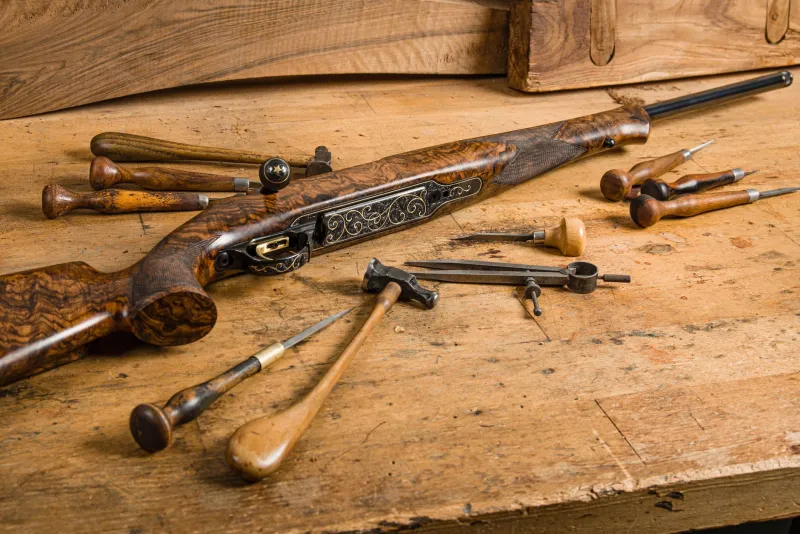
Somewhere in a closet in rural Georgia, wrapped in a flannel shirt that's been there since the Carter administration, there's a Model 94 Winchester that watched three generations of the same family walk into the same deer woods. The bluing is gone on the barrel. The stock has a crack running halfway up the wrist. And if you look close enough at the action, you'll see the telltale orange creep of rust working its way into places it has no business being.
This isn't a story about neglect. It's a story about climate—and about what happens when a family heirloom meets a South Georgia summer.
The humidity in the Deep South isn't just uncomfortable. It's destructive. Relative humidity levels regularly push past 80 percent across much of Alabama, Mississippi, Louisiana, and the coastal Carolinas. Add salt air within fifty miles of the Gulf or Atlantic coast, and you've got conditions that can reduce bare steel to flaking rust in a matter of weeks. For firearms stored in attics, closets, or gun safes without proper climate control, the damage can be silent, steady, and devastating.
"Most people don't realize what they've got until it's already half gone," says Raymond Tuck, a master gunsmith and restorer based out of Natchitoches, Louisiana, who's been salvaging heritage firearms for going on thirty-two years. "They'll pull granddad's old shotgun out of the back bedroom, and the rust is already pitting the metal. At that point, you're not restoring—you're doing damage control."
What Rust Actually Does to a Firearm
Rust isn't just ugly. It's structurally compromising. Iron oxide—what we call rust—doesn't just sit on the surface of steel. It expands as it forms, pushing outward and creating microscopic fractures in the metal beneath it. On a barrel, that can mean weakened walls and potential safety hazards. On an action, it can freeze moving parts together or eat away at the precision tolerances that make a firearm function reliably. On a historically significant piece, it can erase engraving, markings, and serial numbers that give the gun its provenance and value.
For collectors, the distinction between surface oxidation and active pitting matters enormously. Surface rust—that thin, reddish film that appears after brief moisture exposure—can often be addressed without permanent damage. Pitting, where the corrosion has eaten into the metal itself, leaves permanent scarring that even the best restoration can only partially disguise.
"There's a window," says Tuck. "You catch it early, you've got options. You let it go, and you're working with what's left."
Old Methods Worth Keeping
Long before gun shops sold aerosol preservatives and silicon-treated gun socks, Southern families had their own ways of keeping iron from going to rot. Some of those methods were remarkably effective. Others, passed down with the same confidence as a biscuit recipe, did more harm than good.
One of the most enduring traditional practices is the use of rendered animal fat—bear grease being the gold standard in Appalachian communities—applied directly to metal surfaces. It sounds primitive, but the logic is sound. Animal fats create a moisture barrier, and bear grease in particular has a relatively high melting point that keeps it stable in warm storage conditions. Collectors who've inherited guns treated this way sometimes find metal in surprisingly good shape beneath the waxy residue.
Wood ash and linseed oil combinations were commonly used on stocks throughout the rural South, and many old-timers swear by a light coat of petroleum jelly on metal parts before long-term storage. "My daddy wrapped his pistol in a greased rag every winter before he put it up," says Darlene Pickett, a collector from Cullman, Alabama, who now has over forty pieces in her personal collection. "Thirty years later, that gun came out looking like it had barely been touched."
On the other end of the spectrum, WD-40—a product more Southern gun cabinets have seen than probably any other—is one of the most persistent myths in firearm care. It's a water displacer, not a long-term lubricant or protectant. Applied and left, it can actually attract dust and gum up over time. Tuck calls it "the comfort food of gun care. Makes you feel like you did something, but it ain't doing much for you."
What Modern Preservation Looks Like
Today's restorers and serious collectors have access to tools and products that earlier generations couldn't have imagined. Microcrystalline wax products like Renaissance Wax have become something of an industry standard for museum-quality preservation—they create a stable, inert barrier over metal and wood without interacting chemically with either surface. Rust-inhibiting oils like Sentry Solutions TUF-GLIDE and Hornady One Shot offer long-lasting protection that outperforms petroleum-based alternatives in high-humidity testing.
For storage, the real game-changer has been the widespread availability of affordable dehumidifiers and desiccant systems sized for gun safes. A Golden Rod dehumidifier rod—a simple electric heating element that costs less than thirty dollars—can maintain safe humidity levels inside a sealed safe year-round. Silica gel canisters offer a non-electric alternative for smaller storage situations. Neither is a perfect solution on its own, but combined with proper sealing and climate-controlled storage space, they dramatically reduce the risk of moisture damage.
"The biggest shift I've seen in thirty years is people actually thinking about where they store things," says Tuck. "Used to be, a gun went in the closet, end of story. Now I've got customers who've built dedicated storage rooms with humidity monitors on the wall. That's the culture changing for the better."
Saving What Can Still Be Saved
For collectors who've inherited firearms already showing significant deterioration, the path forward depends heavily on the piece's historical significance and intended use. A shooter-grade rifle with moderate pitting might benefit from a professional re-blue job that protects the metal while accepting some loss of originality. A historically significant piece—a Civil War-era revolver, a documented military bring-back, a family firearm with verifiable provenance—demands a more conservative approach that prioritizes stabilization over cosmetic improvement.
Pickett recently brought a pre-war Model 12 Winchester to Tuck's shop after finding it in an outbuilding on her late uncle's property. The metal was heavily patinated, the stock had checking worn almost smooth, and there was active surface rust on the receiver. After careful cleaning with a rust-neutralizing solution and a light application of oil, the gun emerged with its original markings intact and its mechanical function restored—not beautiful by any catalog standard, but honest and whole.
"That gun's got a story," she says. "I don't want to erase that. I just want to make sure it's around for the next fifty years."
The Broader Stakes
There's something bigger at play here than individual guns. The firearms sitting in Southern attics and gun safes represent a tangible, physical record of American life—of hunting traditions, of military service, of craftsmanship that no longer exists in the same form. When those guns rust away unnoticed, that history goes with them.
The collectors and restorers doing this work aren't just hobbyists. They're conservationists in the truest sense of the word—people who understand that preserving the past requires active effort, not passive assumption that things will hold together on their own.
The South's climate is unforgiving. Always has been. But so are the people who've lived in it, worked in it, and built something worth passing down despite it. A little knowledge, the right products, and the willingness to pay attention can mean the difference between a firearm that survives another century and one that crumbles into orange dust in a forgotten corner.
Granddad's rifle deserves better than that.