Last of the Old Guard: Racing Against Time to Capture What Southern Gunsmiths Know
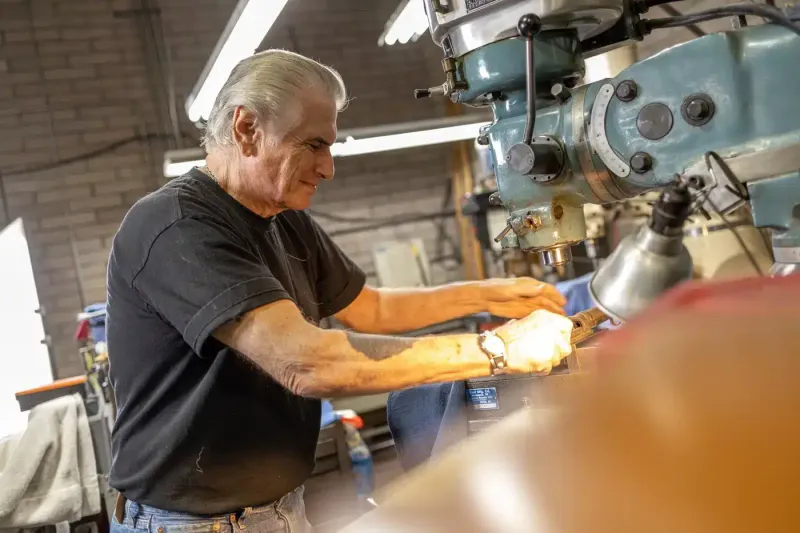
There's a particular kind of silence that settles into an old gunsmith's shop after closing time. The smell of cutting oil and cold steel hangs in the air. Hand-worn tools hang on pegboard walls, each one shaped by decades of grip and purpose. And somewhere in the back, a man in his late seventies is trying to explain — for the first time, really — how he knows when a barrel blank is ready. Not by a gauge. Not by a spec sheet. By feel.
That kind of knowledge doesn't transfer easy. It might not transfer at all, unless somebody's got a recorder running and the patience to listen.
That's exactly what a growing number of Southern gunmakers, heritage organizations, and family-owned manufacturers are betting their legacies on.
The Knowledge That Lives in Hands, Not Manuals
Ask any master craftsman in the firearms trade what separates a good gun from a great one, and they'll struggle to put it into words. That's not false modesty — it's the honest truth about tacit knowledge. The kind of expertise built through thirty or forty years of repetition doesn't always live in the conscious mind. It lives in muscle memory, in intuition sharpened by thousands of small failures and corrections.
Bobby Dean Hargrove, a third-generation stockmaker out of western North Carolina, puts it plainly: "My daddy never wrote a single thing down. Neither did his daddy. You learned by standing next to them and watching until your eyes got tired, then you picked up a tool and you tried. They'd correct you without even looking up from their own work."
That system worked beautifully — right up until the moment it didn't. When shops closed, when sons chose different careers, when old men passed without warning, entire libraries of craft knowledge went with them. No backup. No recovery.
The Southern firearms trade has already lost more than it knows. The question now is whether what remains can be saved.
Recording the Unrecordable
Several efforts across the region are taking different approaches to the same problem. Some are formal. Some are downright grassroots. All of them are urgent.
In Tennessee, a small nonprofit called the Appalachian Craft Preservation Initiative has been conducting long-form video interviews with retired and semi-retired gunsmiths, toolmakers, and metalworkers since 2019. Their archive now holds over 340 hours of footage — men and women demonstrating hand-fitting techniques, explaining their approaches to heat treatment, describing how they learned to read the color of steel under a torch with their naked eye.
"We realized pretty fast that just asking questions wasn't enough," says the initiative's director. "You've got to get them at the bench, with tools in their hands. That's when the real stuff comes out. They'll say something almost offhand — like 'you want just a whisper of drag right there' — and that one phrase tells you more than a whole chapter in a manual ever could."
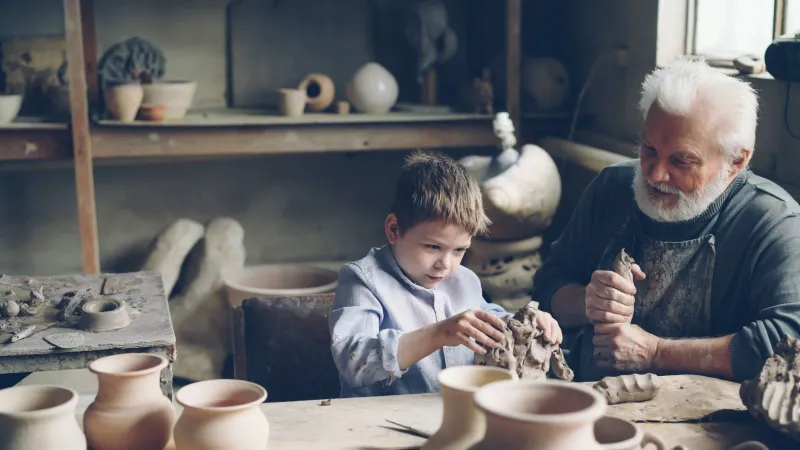
Over in Alabama, a family-owned rifle manufacturer that's been operating since the Eisenhower administration has taken a more internal approach. Rather than outsourcing the documentation effort, they've restructured their entire shop floor around a formal mentorship pairing system. Every craftsman over the age of sixty is matched with at least one apprentice under thirty-five. They work side by side on real production pieces — not practice projects, not simulations.
"We call it earning your hands," says the shop's production manager, a second-generation employee himself. "The young guys don't just watch. They do the work, and the old-timers correct them in real time. We also sit down every Friday afternoon and just talk. What went wrong this week. Why it went wrong. How you recognize it before it becomes a problem. We record all of it."
The Tension Nobody Wants to Talk About
Preserving old-world craft in a modern manufacturing environment isn't all heartwarming mentorship and front-porch storytelling. There's real friction involved.
Production timelines don't pause for oral history. CNC machines and CAD software have taken over functions that once required years of training to master. Younger workers, even the ones who genuinely want to learn, have grown up in a world that rewards speed and efficiency over slow, deliberate craft development. And business owners caught between competitive pricing pressure and the desire to preserve analog traditions are often forced into uncomfortable compromises.
"I'll be honest with you — there are days I wonder if we're fighting a losing battle," admits one Mississippi gunmaker who asked not to be named. "The market doesn't always pay a premium for hand-fitted. Customers want quality, but they also want it Tuesday. Keeping that old knowledge alive costs time, and time costs money."
It's a tension without a clean resolution. But the manufacturers who seem to be navigating it best are the ones who've stopped framing it as tradition versus modernity — and started treating legacy knowledge as a competitive advantage.
When your craftsmen understand why a process works at a fundamental, hands-on level, they can troubleshoot faster, adapt smarter, and catch errors that a machine won't flag. That's not nostalgia. That's operational value.
Family Businesses Carrying the Weight
Maybe nobody feels the weight of this more than the families who've built their names on it.
The Caldwell family has been making custom hunting rifles in rural Georgia for four generations. The current patriarch, seventy-one-year-old Earl Caldwell, has spent the last three years sitting down with his two grandsons — both now working full-time in the shop — and going through every technique he's accumulated since he started sweeping floors at age nine.
"I tell them stories," Earl says with a slow grin. "Because that's how I learned. My granddaddy didn't lecture. He told me about the time he ruined a stock because he rushed the inletting. He told me about the customer who came back furious and what he learned from fixing that gun. The stories are the lesson. Always have been."
His eldest grandson, Marcus, twenty-eight, keeps a worn notebook on his bench. Half of it is measurements and sketches. The other half is exactly what Earl described — stories, phrases, observations jotted down before they fade.
"I know I can look up a torque spec," Marcus says. "What I can't look up is what Pop-Pop knows about reading wood grain before you ever touch a chisel to it. That's the stuff I'm trying to hold onto."
Why This Matters Beyond the Workshop
This isn't just about guns. It's about the Southern tradition of building things right — of treating craft as a form of integrity, not just a job function. The oral histories being captured in these shops are part of a larger American story about what happens when industrial convenience threatens to outpace human wisdom.
The South has always understood that some things are worth preserving even when the market doesn't demand it. Land. Family. Faith. The way your grandfather held a file.
At AK47 Southern Co., we believe that same instinct applies to the knowledge that lives in these workshops. Built South means built with the understanding that the people who came before us left something worth protecting — and that protecting it is our job now.
The recorders are running. The apprentices are watching. And somewhere in a shop that smells like oil and steel and old wood, a man in his seventies is trying to put into words something he's never had to say out loud before.
We'd better be listening.