Tight Tolerances, Long Lives: The Craft Science Behind Custom-Fitted Southern Rifles

Photo by Photo by Marshall Public Library on Unsplash on Unsplash
Walk into any big-box sporting goods store and you'll find a wall of rifles—slick, uniform, priced to move. They look good under fluorescent lighting. They shoot decent groups at the range. And for a lot of folks, that's plenty good enough.
But spend an afternoon with Jimmy Dale Prewitt in his one-room shop outside of Cookeville, Tennessee, and you'll start to see the wall of factory guns a little differently. Jimmy Dale has been fitting barrels, truing actions, and cutting chambers by hand for going on thirty-four years. He's got grease under his fingernails that no amount of soap seems to touch, and he'll tell you straight: the difference between a mass-produced rifle and a hand-fitted one isn't just philosophical. It's measurable.
"A factory gun is built to spec," he says, setting down a receiver he's been lapping smooth. "A custom gun is built to this rifle. Those are two different things."
What 'Hand-Fitted' Actually Means
The term gets thrown around loosely, so let's be specific. When a master gunsmith hand-fits a rifle, he's working to tolerances measured in ten-thousandths of an inch. The barrel is torqued and headspaced to that action—not to a general production standard, but to the actual metal in his hands. The lug surfaces are lapped until contact is even and full. The trigger is adjusted for a crisp, repeatable break. The stock is bedded so the action sits solid, with no flex or stress points that can shift under field conditions.
Factory rifles are built to tolerances that allow interchangeable parts to fit across thousands of units. That's not a flaw—it's the whole point of mass production. But it means there's inherent slop in the system. Lug contact might be sixty percent on a good day. Headspace might be at the outer edge of SAAMI spec. The stock might have a pressure point that wanders as the wood swells in humidity.
For a casual shooter burning through range ammo on weekends, none of that matters much. But for a whitetail hunter in the hill country of West Virginia taking a two-hundred-yard shot through timber at last light, or a competitive shooter running precision matches across the Southeast, those variables stack up in ways that cost you.
What the Hunters Say
Robert Cates has been hunting public land in the Ozarks for twenty-two years. He shot factory rifles for the first fifteen. Four years ago, he commissioned a custom build from a gunsmith in Fayetteville, Arkansas—a .280 Ackley Improved on a Remington 700 action, fully trued and bedded in a McMillan stock.
"Night and day," he says without hesitation. "My factory gun was a three-quarter-MOA rifle on a good day, maybe an inch and a half when the barrel warmed up. This thing shoots half-MOA cold, half-MOA hot. It doesn't care."
That consistency matters more than most people realize. A rifle that shoots differently depending on temperature, barrel heat, or how tight you're gripping it introduces variables that no amount of skill can fully compensate for. Hand-fitting eliminates a significant chunk of those variables before the bullet ever leaves the muzzle.
Sport shooter Dana Hollis, who competes in PRS matches across Georgia and the Carolinas, puts it in economic terms. "I spent twelve hundred dollars on my custom build five years ago. I've run probably four thousand rounds through it. The action is still tight, the barrel is still accurate, and nothing has shifted. A factory rifle at that round count? You're usually looking at some maintenance issues by then."
The Longevity Factor
Here's where the philosophy really separates itself from the marketing. A hand-fitted rifle, properly maintained, doesn't just shoot better—it lasts longer. When components are mated to each other rather than to a production standard, wear is more even and predictable. There are no high spots taking the brunt of every shot cycle. There's no stress concentrated in places where the fit was never quite right to begin with.
Gunsmith Terrance Hobbs, who runs a shop in Boone, North Carolina, has rebarreled customer rifles that were originally built by his mentor in the 1970s. The actions are still solid. "A good Southern gunsmith builds something he expects to outlive him," Terrance says. "That's not arrogance. That's just how we were taught."
Contrast that with the planned obsolescence baked into some modern production firearms, where polymer components and MIM parts are designed to be replaced rather than repaired. There's nothing inherently wrong with that approach, but it does represent a fundamentally different relationship between the craftsman and the object.
A Knowledge Being Lost
Here's the part that ought to concern you. The number of true master gunsmiths in the South—men and women who can true an action, cut a chamber, and bed a stock from scratch—is shrinking. Not because the demand isn't there. It's because the training pipeline has dried up.
Gunsmithing schools still exist, but the curriculum often leans toward warranty repair and parts replacement rather than the kind of foundational metalwork that produces real craftsmen. Young people entering the trade can make decent money swapping out factory components. Learning to fit metal to metal from scratch takes years of apprenticeship under someone who already knows how, and those someones are getting older.
Jimmy Dale Prewitt has had two apprentices in the last decade. One stayed. One left after eighteen months for a job at a dealership doing warranty work. "Can't blame him," Jimmy Dale says. "The money's faster there. But what he learned here, you can't get there."
Why It Still Matters
At AK47 Southern Co., we've always believed that built right means built to last—not built to a quarterly sales target. The Southern gunsmithing tradition isn't just about nostalgia. It's about understanding that when you're depending on a firearm in the field, in competition, or in a defensive situation, the quality of the craftsmanship is the quality of your outcome.
A hand-fitted rifle is a relationship. It's a piece of equipment that was made for you, to your measurements, with your use case in mind. It'll be accurate when the temperature drops, when the barrel's warm, when the conditions are lousy. It'll be reliable in ways a production gun simply cannot guarantee.
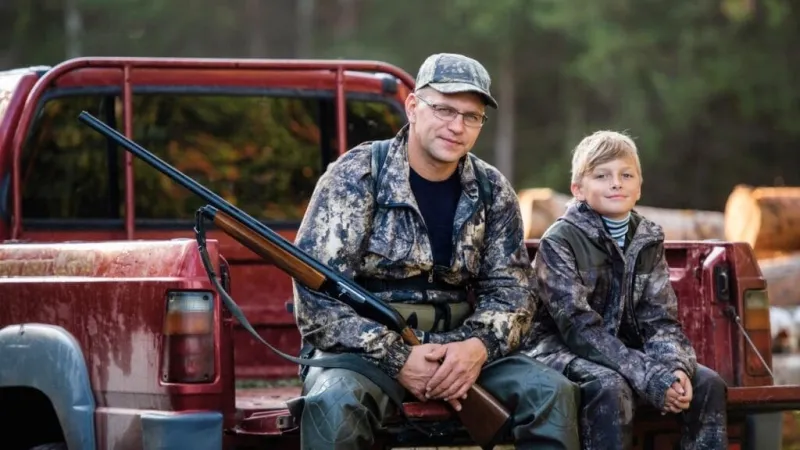
And if you take care of it, it'll be accurate and reliable for your kids, too.
That's not a sales pitch. That's just the truth—measured in ten-thousandths of an inch at a time.