Powder, Pressure, and Proof: Why Southern Hunters Are Testing Their Own Ammo Instead of Trusting the Box
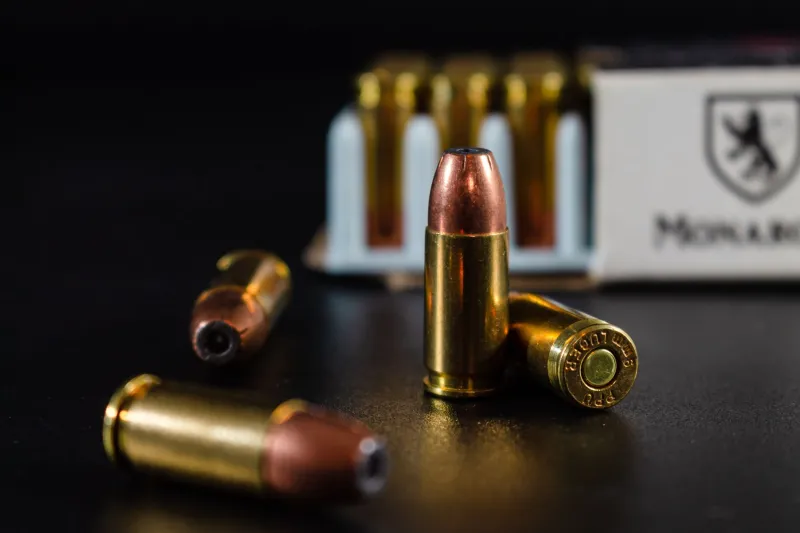
There's a folding table in a barn outside Natchitoches, Louisiana, that has probably seen more ballistic data than most mid-sized R&D departments. It's got a chronograph at one end, a hand-written logbook in the middle, and a man named Curtis who has been loading his own rifle rounds since before most of today's ammo brand managers were born. Curtis doesn't work for a firearms company. He doesn't have a PhD in propellant chemistry. What he has is forty-three years of trigger time, a meticulous eye for consistency, and a healthy distrust of anything that comes printed on the side of a cardboard box.
"If they tested it in a lab in Arizona," Curtis says, squinting down-range at a freshly stapled target, "they didn't test it here. And here is where I hunt."
That sentiment — direct, practical, and rooted in regional pride — is spreading fast across the Southern hunting community. Independent shooters, small-batch loaders, and tight-knit gun clubs from the Ozarks to the Lowcountry are taking ballistic validation into their own hands. They're measuring velocity consistency, documenting terminal performance on game, and optimizing loads for specific rifles, specific climates, and specific terrain. And they're doing it with methods that are part inherited wisdom, part modern instrumentation, and entirely Southern.
Why Factory Claims Don't Always Hold Up Down Here
The core issue isn't that manufacturers are lying. Most major ammo producers test their loads thoroughly — in controlled environments with standardized test barrels under ideal atmospheric conditions. The problem is that the South isn't an ideal atmospheric condition. It's a 95-degree August morning with 87% humidity, a rifle that's been riding in a hot truck cab for two hours, and a deer stand positioned at the end of a long, sloping field that changes your effective range every season depending on how the timber grows.
Hunters down here have always known that what a round does on paper and what it does in the field can be two different animals. Velocity figures printed on a box are typically measured at sea level, at moderate temperatures, using a 24-inch test barrel. Take that same load, stuff it into your 22-inch hunting rifle on a swampy Georgia morning, and you may be looking at meaningfully different numbers — numbers that matter when you're trying to place a clean shot on a whitetail at 200 yards.
That gap between advertised performance and real-world performance is exactly what Southern hunters are closing on their own.
The Tools Are More Accessible Than Ever
For a long time, ballistic testing was the exclusive domain of people with expensive equipment and institutional budgets. That's changed dramatically. Entry-level chronographs that deliver reliable velocity readings now run well under a hundred dollars. Reloading equipment that would have cost a small fortune a generation ago is now widely available at accessible price points. Online communities have made load data, pressure tables, and terminal performance documentation easier to share and cross-reference than ever before.
What Southern shooters bring to this accessible technology is something no price tag can replicate: generations of hands-on knowledge about how firearms behave in real conditions. The old-timers who taught them to shoot also taught them to observe — to notice when a load is printing differently than it should, to pay attention to how brass is seating after a firing cycle, to trust your eyes on a recovered projectile as much as you trust a data table.
Combine that inherited intuition with a decent chronograph and a willingness to fill up a logbook, and you've got a testing program that's more relevant to your actual hunting conditions than anything a corporate lab in a climate-controlled building is going to produce for you.
What They're Actually Measuring
The testing these independent shooters conduct isn't casual plinking. It's structured, documented, and repeatable — which is exactly what good ballistic data requires.
Velocity consistency is usually the first thing on the list. Shooters will run a string of ten to twenty rounds through a chronograph and calculate standard deviation. A tight SD — generally under 15 feet per second — indicates consistent powder burn and reliable primer ignition. A wide SD means something in the load isn't performing uniformly, and that inconsistency will show up downrange as vertical dispersion on a target and unpredictable performance on game.
Terminal performance is where things get genuinely Southern. Hunters here aren't just shooting at paper. They're documenting what their loads do when they connect — tracking recovered projectiles when possible, noting entrance and exit wound characteristics, paying attention to how cleanly and quickly game goes down. That kind of field data, accumulated over multiple seasons across multiple hunters, builds a picture of real-world terminal effectiveness that no gel block test can fully capture.
Load optimization rounds out the process. Once a hunter has velocity data and field performance observations, they can start tuning — adjusting powder charges, trying different primers, experimenting with bullet seating depth — to find the combination that performs best in their specific rifle. It's the same iterative process that professional ballisticians use, just conducted in a pasture instead of a laboratory.
Passing It Down the Right Way
What makes this movement particularly meaningful in the Southern context is that it's explicitly generational. This isn't about individual hobbyists chasing personal optimization in isolation. It's about fathers bringing sons and daughters to the shooting bench and teaching them not just how to shoot, but how to think about shooting. How to question a manufacturer's claim. How to run a fair test. How to document what you see and build on it next season.
Gun clubs across the region are formalizing this process, hosting load development days where members share data, compare results, and pool their collective field observations. Some are building shared logbooks that track performance across dozens of rifles and multiple hunting seasons. The knowledge base they're creating is genuinely valuable — and it belongs to the community, not to any corporation.
"My granddaddy kept notes on every deer he ever shot," says a club member from the Tennessee hill country. "What he used, where he hit, how far. I've got those notebooks. I add to them every year. My kids will add to them after me."
The Bigger Point
This isn't a rejection of the firearms industry or the manufacturers who supply the Southern hunting community. Good ammo is good ammo, and plenty of factory loads earn their reputation honestly. But there's a principle at work here that goes deeper than ballistics — the idea that you shouldn't outsource your knowledge to someone who doesn't know your land, your rifle, or your conditions.
The South has always had a productive skepticism toward distant authority telling local people what works. That skepticism built some of the most capable, self-reliant communities in the country. Applied to ammunition performance, it's building a generation of hunters who understand their tools at a level most shooters never reach.
The barn lab in Louisiana is open every weekend through deer season. Curtis keeps the logbook. The data keeps growing. And the box claims keep getting tested.