Rust Never Sleeps Down Here: How Southern Engineers Are Winning the War Against Humidity in Firearms Storage
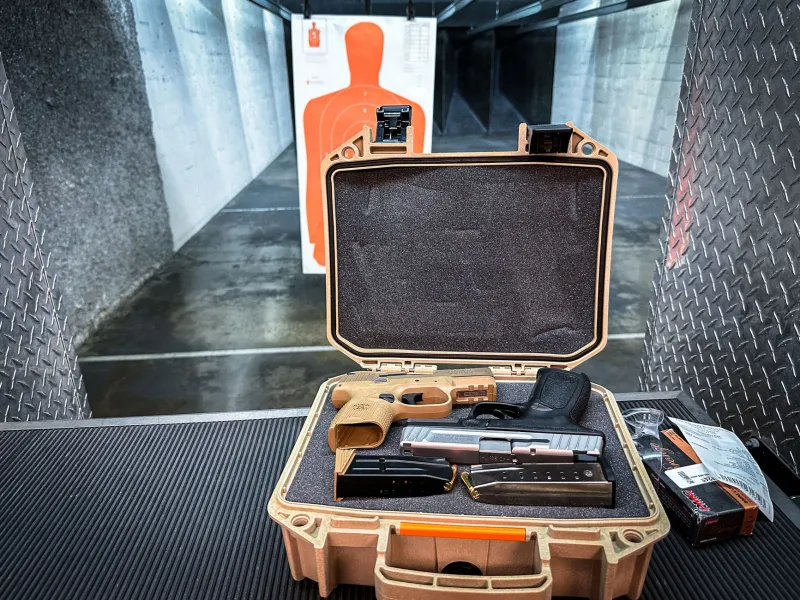
Anybody who's grown up below the Mason-Dixon line knows the feeling. You crack open a gun safe in August, pull out a rifle you haven't touched since last deer season, and there it is — that faint orange blush creeping along the barrel. Rust. The quiet enemy that never punches out, never takes a day off, and doesn't care one bit how much you paid for that firearm.
This isn't a small problem. Across the South — from the Gulf Coast marshes of Louisiana to the piedmont hills of the Carolinas — relative humidity regularly sits between 70 and 90 percent for months at a stretch. When you factor in temperature swings, condensation cycles, and the way heat pulls moisture right through foam-lined interiors, you've got a storage environment that's about as hostile to bare steel as anything short of saltwater. And for a lot of Southern gun owners, that reality is finally forcing a reckoning.
The Science Behind the Damage
Rust isn't just surface-level ugliness. It's an electrochemical process — iron, oxygen, and water combining to form iron oxide — and it doesn't need much invitation to get started. In high-humidity environments, the thin film of moisture that clings to metal surfaces is enough to kick off the reaction. What makes Southern conditions particularly nasty is the cycling: warm, wet days followed by air-conditioned interiors create repeated condensation events. Every time that temperature differential crosses the dew point, moisture forms directly on the metal.
Standard gun safes — the kind sold in big-box stores designed and tested in drier climates — weren't built with Biloxi or Savannah in mind. Their foam interiors absorb and hold moisture. Their powder-coated interiors can trap condensation in corners. Even the desiccant packs that come standard in many units get overwhelmed within weeks during a Southern summer.
"The problem isn't that people aren't trying to protect their guns," says one materials engineer based out of Birmingham who's been developing moisture-resistant storage liners for the past several years. "The problem is that the solutions they're buying were designed for somewhere else. They work fine in Colorado. Down here, they're barely keeping up."
Why National Brands Keep Missing the Mark
Large national manufacturers operate at scale, which means they engineer to a middle-ground standard. A product that performs adequately in Kansas City, Portland, and Phoenix is the goal — not one optimized for Mobile, Alabama in July. That's a business decision that makes sense in a spreadsheet. It just doesn't work great when you're storing a $2,000 rifle in a garage that sees 88 percent humidity for six months straight.
Southern manufacturers and engineers have started recognizing this gap — and more importantly, they've started filling it. The competitive advantage here isn't just regional pride. It's lived experience. When your shop is in Pensacola and your test environment is an actual Gulf Coast summer, you're not simulating conditions. You're working in them.
Several smaller Southern companies have begun developing storage solutions built specifically around regional climate data. That means interior materials chosen for their moisture-wicking and non-absorbent properties rather than just cushioning. It means airflow engineering that accounts for real-world temperature cycling. It means gasket systems tested against actual Southern humidity curves, not laboratory simulations.
New Materials, New Thinking
One of the more interesting developments coming out of the region involves composite liner materials that actively resist moisture absorption. Traditional foam — the stuff lining most gun cases and safe interiors — is essentially a sponge. It pulls moisture in, holds it against the metal, and creates the exact microenvironment where rust thrives.
Engineers experimenting with closed-cell polymer materials and treated fabric composites are seeing significantly different results. These materials don't just repel moisture — they actively reduce the surface contact between metal and any humidity that does make it inside. Pair that with better-sealed door systems and integrated desiccant channels that can be recharged without removing stored firearms, and you've got a meaningfully different product.
"We stopped thinking about it as a safe with a dehumidifier tossed in," explained one product developer working with a small Southern outfit focused on storage solutions. "We started thinking about it as a controlled environment. The whole system has to work together — the seal, the liner, the airflow, the desiccant capacity. If one part fails, the whole thing fails."
Corrosion-resistant coatings are also getting more attention. Cerakote and similar ceramic-based finishes have been popular in the firearms world for years, but their application to storage hardware — hinges, racking systems, interior fasteners — is a more recent focus. Every piece of metal inside a safe is a potential rust point, and Southern engineers are starting to treat them that way.
The Practical Reality for Gun Owners
For the average Southern gun owner, all of this engineering matters — but so does practical habit. Even the best-designed storage system can be overwhelmed if the basics aren't covered. That means rechargeable desiccants checked regularly, not just tossed in and forgotten. It means not storing firearms immediately after coming in from a hot, humid outdoor environment without letting them acclimate. It means understanding that the garage, for most Southern homes, is one of the worst possible storage environments without serious climate control.
It also means being honest about what your current setup is actually doing. A lot of gun owners in the South are running decades-old safes with original foam that's been saturated and dried out more times than they can count. That foam isn't protecting anything anymore — it's a moisture reservoir sitting against your steel.
The good news is that regional awareness of this problem is growing, and so is the market for solutions actually built to address it. Southern manufacturers who've made the investment in understanding their own climate — not just copying what works elsewhere — are finding that gun owners are willing to pay for products that genuinely solve the problem.
A Regional Problem Becomes a Regional Edge
There's something fitting about the South producing the best answers to a problem the South knows better than anyone else. National brands will catch up eventually — they always do. But right now, the engineers and small manufacturers working out of Alabama, Georgia, Mississippi, and the Carolinas have a window. They understand the enemy. They live with it. And they're building accordingly.
For Southern gun owners tired of opening their safes to find rust where bluing used to be, that's more than a business story. It's a practical lifeline — and proof that sometimes the best solutions come from the people closest to the problem.