Born in a Barn, Built for Battle: The South Carolina Family Rewriting Ammunition Testing Standards
A Dirt Berm and a Dream
Most empires don't start with spreadsheets and venture capital. Some start with a beat-up chronograph, a stack of yellow legal pads, and a father who got tired of buying ammo that didn't perform the way the box said it would.
That's the honest origin story of Hargrove Ballistic Services, a family-run ammunition testing operation headquartered on a working farm just outside Lexington, South Carolina. What began in the mid-2000s as one man's backyard obsession has quietly grown into a regional authority that commercial producers, law enforcement agencies, and serious hunters consult before they trust a single round downrange.
Randall Hargrove, the patriarch and founder, doesn't dress the story up. "I was reloading for deer season, and I kept getting inconsistent results," he says, leaning against a workbench that looks like it's been through three decades of hard use. "I started wondering if the factory stuff was any better. Turns out, sometimes it wasn't. So I started keeping notes."
Those notes eventually filled a shelf. Then two shelves. Then a dedicated room. And somewhere in between, Randall's oldest daughter, Cassie, came home from a materials science program at Clemson and looked at her father's handwritten data logs with fresh eyes.
"She told me I was sitting on a methodology," Randall says with a grin. "I told her I was sitting on a hobby. We were both right."
The Unconventional Science of Getting It Right
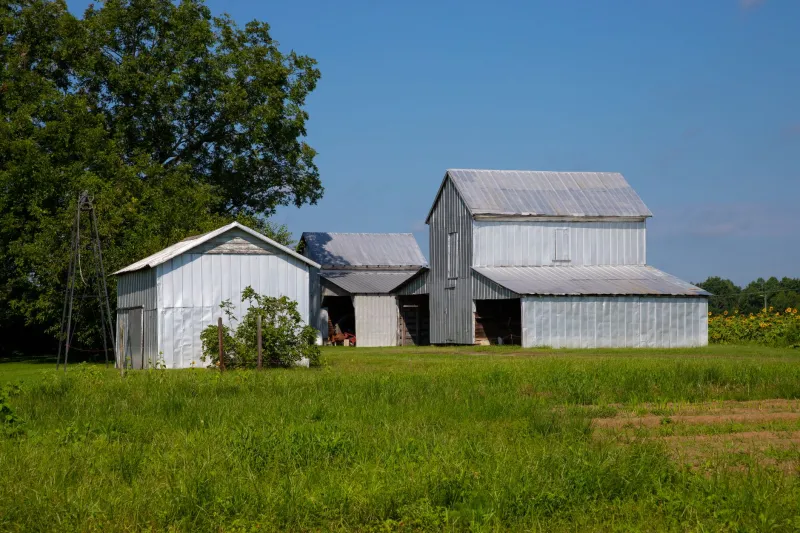
Hargrove Ballistic Services doesn't look like a laboratory. The main testing facility is a converted and reinforced barn — climate-controlled now, but still wearing the original timber frame — surrounded by a series of outdoor ranges at measured distances from 25 yards out to 500. A secondary indoor facility handles controlled-environment testing for humidity sensitivity and temperature variance, two variables that matter enormously in the South and get criminally little attention from manufacturers based in the Northeast or Midwest.
That regional focus is a core part of what makes the Hargroves' data valuable. Ammunition that performs beautifully in a 55-degree Colorado morning can behave differently after sitting in a truck cab through a Georgia August. The family tests across seasons, across humidity levels, and across a range of firearms platforms that would make most commercial QA departments blush.
"We run the same lot through a bolt gun, a semi-auto, and a lever action," says Cassie, who now serves as the operation's technical director. "Platform behavior matters. If you're only testing in one context, you're only telling part of the story."
Their testing protocol covers velocity consistency across a full lot, pressure curve analysis, terminal performance in ballistic gelatin, primer reliability under variable temperatures, and what Cassie calls "shelf honesty" — a proprietary assessment of whether a round's real-world performance matches the manufacturer's published specifications after extended storage.
That last category has ruffled more than a few feathers in the industry.
When the Data Doesn't Lie
The Hargroves are careful about naming names publicly, but their reports — which circulate among a growing network of dealers, competitive shooters, and procurement officers — have flagged inconsistencies in products from both budget and premium brands. They don't run a sensationalist operation. They're not trying to embarrass anyone. But they're also not in the business of softening numbers to protect relationships.
"Our value is that we don't have a dog in the fight," Cassie explains. "We're not selling ammo. We're not affiliated with any manufacturer. The only thing we're selling is accurate information, and the moment we compromise that, we're worthless."
That independence has made them trusted in circles where trust is hard-won. Several Southern law enforcement agencies now send duty ammunition through Hargrove testing before approving procurement. A handful of competitive shooting organizations use their lot-testing services to verify consistency before major matches. And a growing list of smaller domestic ammunition producers — exactly the kind of operations we've covered before on this site — use Hargrove data as a third-party quality benchmark before they go to market.
Keeping It in the Family, Keeping It in the South
Randall's youngest son, Tyler, joined the operation three years ago after a stint in the Army that included time as a small arms repair specialist. He brought with him a working knowledge of how ammunition failures look from the user's end — jams, misfires, case separations — and a vocabulary for cataloging them that the family's previous methods hadn't fully captured.
"Tyler changed how we document failure modes," Cassie says. "He thinks like a soldier, which means he thinks about what happens when something goes wrong at the worst possible moment. That perspective sharpened everything."
The family has no interest in relocating, franchising, or selling. They've had conversations with larger testing firms looking to acquire regional operations, and those conversations have been brief. The farm, the methodology, and the independence are not negotiable.
"People ask if we want to scale up, get a real facility, get investors," Randall says. "I tell them we have a real facility. It's just got more history than most."
Setting a Bar the Big Players Have to Clear
What the Hargroves have built matters beyond their own operation. In a market where ammunition marketing often outpaces ammunition performance, independent testing voices carry weight they've never carried before. Consumers are more skeptical, more educated, and more willing to seek out third-party verification than they were a generation ago — and operations like Hargrove Ballistic Services exist precisely to meet that demand.
The Southern angle isn't incidental, either. The region's hunting culture, its military heritage, and its deep tradition of practical self-reliance create an environment where performance actually matters. Nobody here is buying ammunition for a shelf display. They're buying it for deer season, for home defense, for a match they've been training toward for six months. The stakes are real, and the Hargroves test like they are.
A barn in Lexington County. A chronograph and a legal pad. One family that decided if the data didn't exist, they'd build it themselves.
Sounds about right for this part of the country.