Put the Phone Down and Pick Up the Rifle: The Case for Going Dark at the Range
The Range Isn't a Classroom — Until It Is
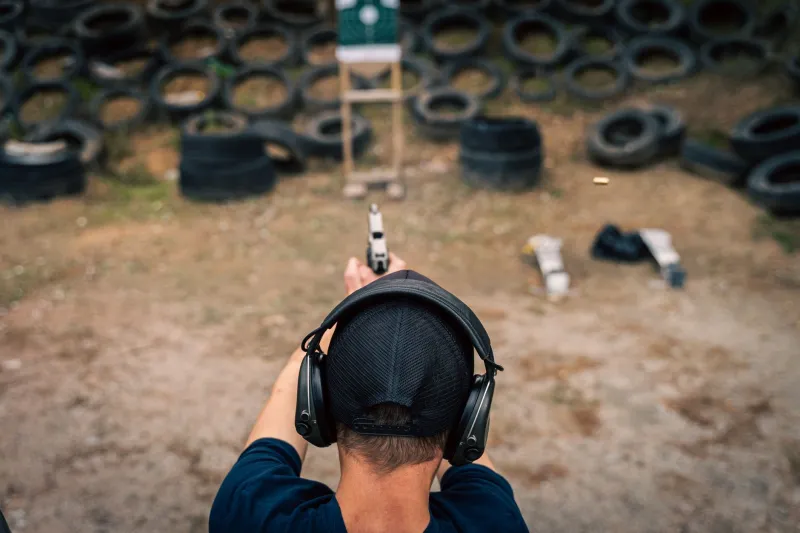
Walk into a traditional Southern shooting club on a Saturday morning and you'll find something that used to be unremarkable: people shooting. Not filming themselves shooting. Not checking notifications between strings. Not half-listening to a range safety briefing while scrolling a feed. Just shooting, watching, and learning from the people standing next to them.
That picture is becoming rarer than it should be — and a growing number of range masters across Georgia, Tennessee, Alabama, and the Carolinas are doing something about it.
The no-phone range movement isn't a viral trend. It didn't start with a hashtag. It started with frustration, with close calls, and with old-timers watching something they'd spent decades building get quietly undermined by a rectangle of glass and aluminum in someone's back pocket.
"I had a guy filming a reel while his muzzle swept the line," says Bobby Tatum, range master at a private club outside Macon, Georgia, who asked that the facility's name be withheld. "He didn't even know he'd done it. He was watching the screen, not the gun. That was my line in the sand."
Safety First, But Not Only Safety
The safety argument for phone-free ranges is the easy one to make, and it's persuasive on its own. Firearms demand a specific kind of attention — continuous, physical, spatially aware — that is fundamentally incompatible with divided attention. The research on this isn't even controversial. You cannot properly monitor your muzzle direction, your trigger finger discipline, and your neighbor's movements while simultaneously managing a notification or composing a caption.
Range masters who've implemented no-phone policies report immediate, measurable changes in safety behavior. Muzzle discipline improves. Shooters keep their fingers indexed outside the trigger guard more consistently. Range commands are followed faster and more completely. The ambient noise level drops, which itself reduces communication errors.
"It's like the difference between driving with the radio off versus on," says Linda Prewitt, who co-runs a family range in Rutherford County, Tennessee. "Your reaction time isn't the same. Your awareness isn't the same. And on a range, reaction time and awareness are the whole ballgame."
But the safety case, compelling as it is, isn't the only reason these clubs are drawing the line. The deeper argument is about something harder to quantify.
What Gets Lost When the Screen Stays On
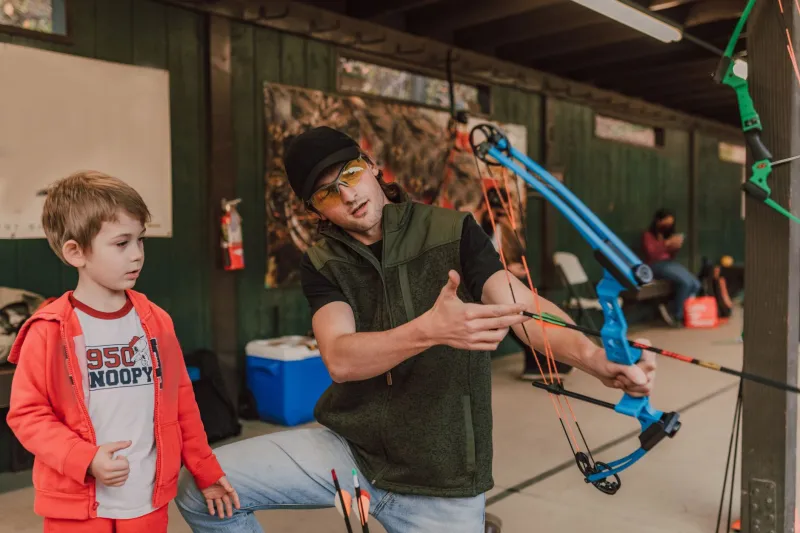
Shooting has always been a mentorship culture. The knowledge that lives in Southern gun clubs — the trigger control wisdom, the reading of wind and mirage, the patience that comes from watching a master shooter work through a problem — doesn't transfer through YouTube. It transfers through proximity, repetition, and conversation.
When a newer shooter is staring at their phone between strings, they're not watching the experienced shooter two stations down work through a reload. They're not hearing the offhand comment from a sixty-year veteran about why their grip is causing their shots to pull left. They're not in the room, even when they're physically present.
"The phone creates a bubble," says Tatum. "And inside that bubble, you think you're getting smarter because you're watching shooting content online. But you're missing the real thing happening three feet away from you."
Prewitt echoes this directly. "I've had kids come in who've watched thousands of hours of range video and they can't run a basic malfunction drill. They know what it looks like. They've never actually done it. There's a word for that — it's called being fooled."
The Pushback, and Why It Doesn't Hold Up
Not everyone has welcomed the change. Some younger members initially bristled at what they perceived as an anti-technology stance from older leadership. A few complained that they use their phones for ballistic calculators or dope cards. Several ranges that implemented the policy saw short-term membership friction.
The responses from range masters have been consistent: bring a printed dope card, bring a dedicated ballistic device, bring a notebook. The phone stays in the bag.
"We're not anti-technology," Prewitt is careful to say. "We're pro-focus. If you need a ballistic app, print your data before you walk to the line. That's not a hardship. That's preparation, which is something we're supposed to be teaching anyway."
The longer-term membership data, where clubs have tracked it, tells an interesting story. Initial friction gives way to higher engagement. Members who stay report that their sessions feel more productive. Newer shooters progress faster. And the social fabric of the range — the conversations, the coaching moments, the shared experience — strengthens visibly.
"We had a guy last spring who'd been shooting with us for two years and never really talked to anyone," Tatum recalls. "First week of the no-phone policy, he's asking questions, he's getting feedback, he's staying an hour later than he used to. The phone was the wall. We just took the wall down."
The Tradition Worth Protecting
There's something bigger at stake here than safety statistics or skill development metrics, and the range masters who are pushing this policy hardest seem to understand it intuitively. What they're protecting is a way of passing things down.
The Southern shooting tradition is an oral and physical tradition. It lives in demonstration, in correction, in the story an old-timer tells while you're both watching a target. It lives in the kind of attention that can't be split. When that attention gets fragmented, the chain of transmission — from one generation to the next — gets weaker.
These range masters aren't Luddites. They're conservationists. They're looking at something irreplaceable and deciding it's worth the inconvenience of an unpopular rule.
Put the phone in the bag. Watch the shooter next to you. Ask a question. Listen to the answer.
The range has been teaching people things for a long time. It works best when you show up for it.