Stitched in the South: The Leatherworkers Handcrafting Rifle Slings and Gear Worth Passing Down
The Sling That Outlasts the Rifle
There's a particular kind of leather sling that shows up at Southern gun shows — usually on a folding table run by someone who doesn't have a website, doesn't take credit cards, and has a three-month backlog. It's not flashy. It doesn't have MOLLE attachments or a quick-detach swivel system or a logo you'd recognize. What it has is weight, suppleness, and the unmistakable quality of something built by a person who knew exactly what they were doing.
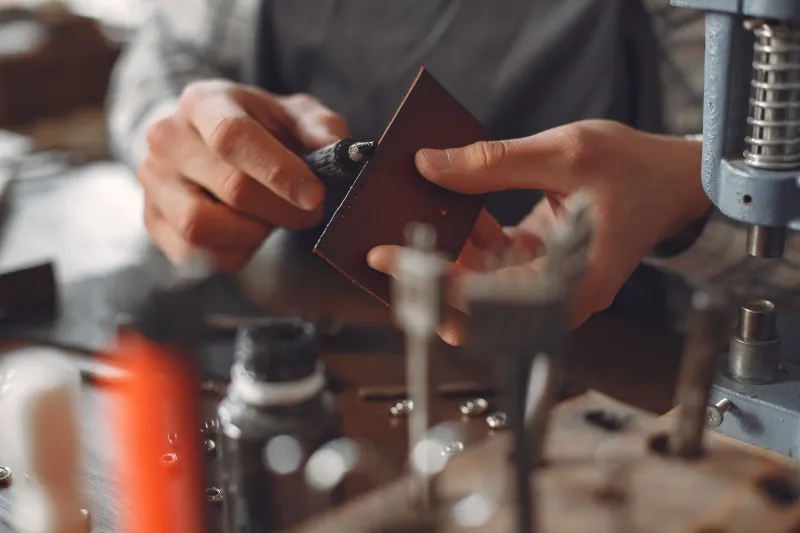
Pick it up and you know immediately that it's different. The stitching is tight and even in a way that machines approximate but don't replicate. The leather has been selected, cut, and finished by hand, and it carries the slight variations that prove it. It will outlast the rifle it's mounted on. It will look better in twenty years than it does today.
This is what's being made in workshops across the South right now, by a loose community of leatherworkers who've decided that the craft their grandparents practiced deserves a serious revival — and that there's a market of hunters, competitive shooters, and military veterans who are ready to pay for the real thing.
Why the Old Methods Still Win
To understand why handmade leather gear commands the prices it does — and the loyalty it earns — you have to understand what gets lost in the industrial process.
Commercial leather goods are produced at speed and scale. Hides are selected for uniformity and processed with efficiency in mind. Stitching is done by machine, which means thread tension is consistent but not adaptive — a machine can't feel that a particular section of leather is slightly denser and compensate the way a skilled hand can. Edges are finished quickly. Hardware is installed with a press, not fitted individually.
None of this is dishonest. It produces functional gear. But functional and exceptional are not the same thing, and the gap between them is exactly where Southern craftspeople are building their businesses.
"Mass production optimizes for average," says Dale Whitfield, who runs a one-man leather shop in the Blue Ridge foothills of North Carolina. "My work optimizes for this specific piece of leather, this specific customer, and what they're going to do with it for the next thirty years."
Whitfield learned the trade from his uncle, who learned it from a saddler who'd been working in the region since the 1950s. That lineage matters to him — not as a marketing story, but as a practical inheritance. The techniques he uses were developed over generations of real-world feedback. They work because they were tested against hard use, not against a production schedule.
Profiles in the Craft
Whitfield isn't alone. Across the South, a handful of craftspeople are doing similar work with similar philosophies, and their customer bases are growing through word of mouth faster than most of them can keep up with.
In central Alabama, a former Marine named James Corder started making rifle slings in his garage after he couldn't find anything on the market that met what he describes as "field standards" — meaning gear that would hold up under the kind of abuse that actual field use delivers, not the kind of abuse a product testing checklist imagines.
"I'd been through enough cheap slings to know what failure looks like," Corder says. "Stitching that pulls out at the hardware attachment point. Leather that stiffens up in cold weather and cracks when you flex it. Hardware that corrodes. I decided I'd rather make it myself than keep buying garbage."
His first slings went to friends. Then to their friends. He now has a six-month wait list and has turned down two offers from outdoor retail brands looking to license his designs for mass production.
"The minute you scale it up, it stops being what people are paying for," he says simply.
In East Tennessee, a husband-and-wife team, Ray and Donna Salter, operate a small shop that produces not just slings but a full line of hunting accessories — cartridge loops, knife sheaths, binocular harnesses — all stitched by hand using saddle-stitch technique, which creates a lockstitch that won't unravel even if a single thread breaks. Their work has found its way into the hands of serious hunters who've stopped buying anything else.
The Materials Are Half the Story
One thing that unites these craftspeople is an almost obsessive attention to the leather itself. Not all leather is the same — not even close — and the difference between a sling that lasts a generation and one that falls apart in a few seasons often starts at the tannery.
Most of the craftspeople profiled here source from a small number of domestic tanneries that still produce full-grain, vegetable-tanned leather — a slower, more expensive process that creates a denser, more durable hide than the chrome-tanning methods that dominate industrial production. Vegetable-tanned leather also develops a patina with age and use, darkening and softening in ways that chrome-tanned leather simply doesn't.
"The leather I use gets better the more it's handled," Whitfield says. "It molds to the person using it. That's not a feature you can put in a spec sheet, but it's what people remember twenty years later."
Hardware selection is equally deliberate. Solid brass or stainless steel swivels and keepers, sourced from domestic suppliers where possible. Nothing plated. Nothing that will corrode, loosen, or fail under the weight of a heavy rifle over a long day in the field.
A Market That's Ready
The timing of this revival isn't accidental. American consumers — particularly in the outdoor and firearms space — have spent the last decade growing increasingly skeptical of mass-produced gear that underdelivers on its promises. Supply chain disruptions, quality control failures, and the general fatigue of replacing cheap equipment every few seasons have pushed a meaningful segment of the market toward the premium end.
These leatherworkers are meeting that demand with something that can't be counterfeited: skill that took years to develop, materials chosen for performance rather than margin, and the kind of accountability that comes with putting your name on every piece you make.
It's not a trend. It's a correction. The South has always known how to build things that last, and the people keeping this craft alive are proof that knowledge doesn't disappear — it just waits for the moment when people are ready to value it again.
The sling outlasts the rifle. That's the point. That's always been the point.