From the Ground Up: Why Southern Manufacturers Treat Raw Materials Like Sacred Ground
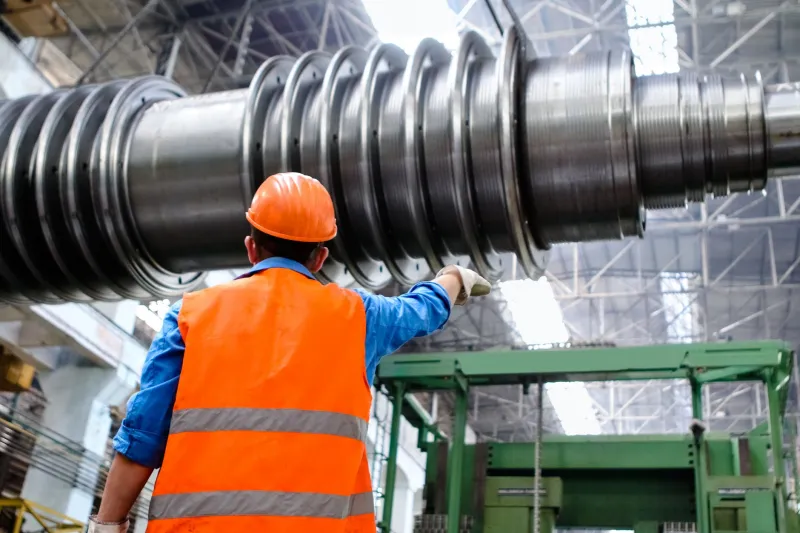
There's an old saying that runs through machine shops and mill floors across the South: You can't polish a bad billet. It sounds simple enough, maybe even obvious. But walk through any serious Southern manufacturing operation — whether they're producing firearms components, agricultural equipment, or precision outdoor gear — and you'll find that those five words carry the weight of a company philosophy.
Southern manufacturers, particularly those operating in the firearms and outdoor equipment space, have developed a reputation that goes well beyond regional pride. It's a reputation built on what they put in before they ever worry about what comes out. And right now, in a market flooded with overseas alternatives and race-to-the-bottom pricing, that commitment to material integrity is starting to look less like stubbornness and more like strategy.
The Steel Doesn't Lie
Ask any Southern gunsmith or mill operator what separates their product from the competition, and they'll eventually circle back to the same answer: the steel.
"Most people want to talk about machining tolerances or finishing work," says one Alabama-based manufacturer who supplies components to several regional firearms builders. "But if your material is inconsistent, nothing downstream matters. You can have the best machinists in the country and still end up with a part that fails at the worst possible moment."
That's not a hypothetical concern in this industry. Material failure in a firearm — or in a piece of load-bearing outdoor equipment — isn't just a warranty issue. It's a safety issue. And Southern manufacturers in this space tend to treat it accordingly.
The steel grades that matter most in Southern firearms and tooling production typically fall in the 4140 and 4150 chromoly range, with some builders opting for 416 stainless for specific applications. Each of these has distinct properties — tensile strength, hardness, corrosion resistance — and each demands careful sourcing and verification before it ever touches a lathe or mill.
"We don't just order steel and assume it is what the invoice says it is," explains a quality assurance lead at a Tennessee-based components shop. "Every batch gets tested. Hardness testing, chemical composition verification — the works. We've turned away material from domestic suppliers when it didn't meet spec. That's not something everyone is willing to do, especially when lead times are tight."
The Supply Chain Isn't Just Logistics — It's Values
For many Southern manufacturers, the decision about where raw materials come from carries as much weight as the technical specifications themselves. There's a deep-seated cultural resistance to sourcing inputs from overseas suppliers when domestic options exist — and it's not purely ideological. It's practical.
"When you're buying steel from a domestic mill, you've got traceability," says one Georgia-based procurement manager. "You know the mill, you can visit the mill, you can build a relationship with the people there. When something is off, you can have a real conversation and get it fixed. That accountability disappears when your supply chain stretches to the other side of the world."
This preference for domestic sourcing has grown even stronger in the wake of supply chain disruptions that rattled manufacturers across every sector. Southern producers who had already committed to domestic and regional suppliers found themselves in a far better position than competitors who had optimized for cost at the expense of reliability.
Several Southern steel mills — particularly in states like Alabama, Kentucky, and West Virginia — have deepened their relationships with regional manufacturers over the past several years, creating tighter feedback loops between raw material production and end-use manufacturing. It's a supply chain model that looks a lot more like the old-school vertical integration of American industry than the globally distributed networks that became fashionable in the early 2000s.
Testing Is Not Optional
In a well-run Southern manufacturing operation, incoming material inspection isn't a checkbox — it's a culture. The investment in testing equipment and the discipline to use it consistently represent a meaningful cost that some competitors simply choose not to absorb.
Spectrometer analysis, Rockwell hardness testing, and ultrasonic inspection for internal defects are increasingly common in shops that take their material standards seriously. These aren't exotic technologies, but they require investment, trained personnel, and — most importantly — the organizational will to act on results even when it's inconvenient.
"We had a situation a couple years back where a full pallet of bar stock came in and tested outside our acceptable range for carbon content," recalls one North Carolina shop foreman. "It wasn't dramatically off, but it was off. Some shops would have run it anyway. We sent it back. That decision cost us about three weeks on a delivery schedule. But the customer would rather wait three weeks than get a part that doesn't perform."
That calculus — short-term cost against long-term reputation — is one that Southern manufacturers in this space tend to resolve in favor of reputation every time. It's a mindset rooted in the understanding that a single failure in the field does more damage to a brand than a dozen late deliveries.
Specialized Alloys and the Next Generation of Southern Manufacturing
Beyond standard steel grades, a growing number of Southern manufacturers are working with specialized alloys and advanced materials as product demands evolve. Titanium components, aluminum alloy receivers, and polymer-composite assemblies are increasingly common in the outdoor and firearms equipment space — and each brings its own sourcing and testing challenges.
"The alloy side of things is where we've invested the most in the last five years," notes one Florida-based manufacturer who produces components for the tactical equipment market. "The material science has advanced, and our customers' expectations have advanced with it. You can't just apply old-school steel sourcing logic to a 7075 aluminum forging. The failure modes are different, the testing protocols are different, the supplier relationships are different."
This willingness to invest in new material competencies — while maintaining the fundamental discipline of verification and accountability — reflects a broader maturation in Southern manufacturing. The region's producers aren't simply doing things the old way out of tradition. They're doing things the right way, adapting methods to new materials while holding onto the principles that built their reputations.
Built South. Built to Last.
At the end of the day, the Southern commitment to material standards isn't about marketing. It's about accountability — to customers, to craft, and to the communities where these businesses operate. When your company name is on the side of a product that someone is carrying into the field or relying on in a critical moment, the steel inside it had better be exactly what it needs to be.
No shortcuts. No assumptions. No compromises on the inputs, because the outputs are what people stake their safety and their satisfaction on.
That's not just a quality control philosophy. Down here, it's a way of doing business — and it's one that's proving harder to undercut than any overseas price advantage.