Fire, Pressure, and Precision: The Southern Metallurgists Quietly Rewriting the Rules of Barrel Forging

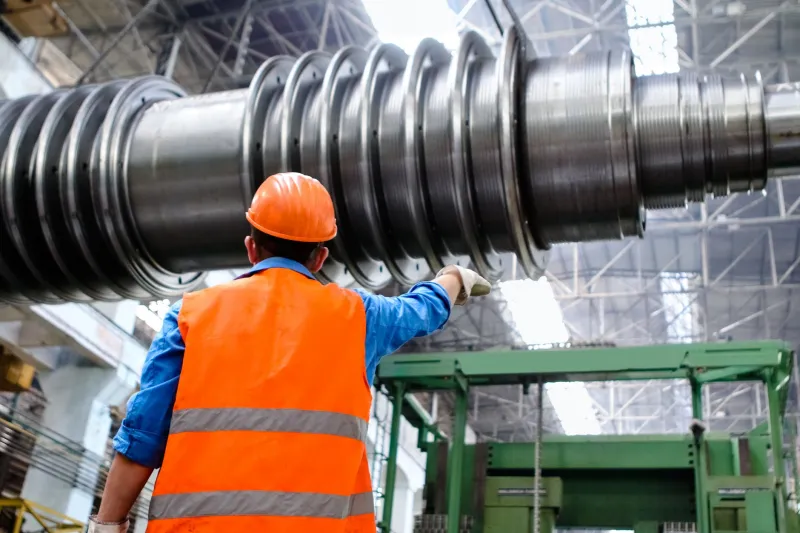
Photo by Photo by Ant Rozetsky on Unsplash on Unsplash
Most people who pick up a rifle never think much about the barrel. They think about the trigger, the optic, maybe the stock. But the barrel — that long, deceptively simple tube of steel — is where everything that matters actually happens. It's the last thing the bullet touches before it leaves for its destination, and the tolerances involved are almost incomprehensible to the average shooter. A few ten-thousandths of an inch in the wrong direction and your groups open up. A flawed heat treatment and your barrel wears out in a fraction of the rounds it should last.
A growing number of Southern engineers understand this better than just about anyone in the country. And they're doing something about it.
Where Ironworking Bloodlines Meet Engineering Degrees
The Southern Appalachian region has been working iron and steel longer than most Americans realize. Long before there were CNC machines or spectrometers, families in western North Carolina, east Tennessee, and southwest Virginia were smelting ore, running bloomeries, and turning raw metal into tools, hardware, and yes — gun parts. That knowledge didn't disappear. It got passed down through shops and supper tables and Saturday mornings spent watching a father or grandfather work.
What's different today is that the generation now running these foundries and metallurgical operations came up with both that hands-on inheritance and formal engineering credentials. Guys like Marcus Holt, a third-generation ironworker from Smyth County, Virginia, who holds a materials science degree from Virginia Tech, or Delia Carver, a Clemson-trained metallurgical engineer whose family ran a small foundry outside Gaffney, South Carolina, for decades. These aren't people who stumbled into barrel-making. They grew up inside it.
"My grandfather could tell you what was wrong with a heat by the color of the metal," Holt says, leaning against a workbench covered in steel samples. "I can tell you why it was wrong at the molecular level. Put both of those things together and you've got something nobody else has."
The Steel Itself: Starting Before the Forge
What separates genuinely superior barrel steel from commodity-grade material starts long before anything gets heated or hammered. It starts with ore selection and alloy composition — decisions that most large-scale manufacturers have outsourced to supply chains that prioritize cost over consistency.
Southern metallurgists working at this level are increasingly developing what insiders call proprietary compositions — specific blends of chromium, molybdenum, vanadium, and other elements tailored to the exact performance profile a barrel needs. The goal is steel that holds rifling geometry under sustained heat and pressure, resists corrosion without sacrificing hardness, and maintains dimensional stability through thousands of firing cycles.
"Off-the-shelf 4140 or 416R stainless gets you a good barrel," Carver explains. "But good isn't the point anymore. The market has matured. Serious shooters know what good feels like. They're asking for exceptional."
Achieving exceptional means obsessing over trace element percentages that most mills don't even bother to report. It means sourcing steel from suppliers willing to work to tighter certifications and subjecting every incoming batch to independent spectrographic analysis before it ever touches a lathe.
Inside the Forge: Where Science Gets Physical
Button rifling, hammer forging, cut rifling — each method has its advocates, and each places different demands on the steel. The Southern engineers pushing the frontier of barrel performance tend to favor cold hammer forging for production applications, a process where a carbide mandrel is driven through a heated barrel blank while external hammers compress and shape the steel around it simultaneously.
Done right, cold hammer forging produces a barrel with a work-hardened bore surface that's denser and more wear-resistant than virtually any other method. Done wrong, it introduces stress concentrations that will eventually crack or cause dimensional drift. The difference between right and wrong comes down to temperature control, hammer timing, mandrel geometry, and the metallurgical properties of the blank going in.
"The forge doesn't forgive bad steel," Holt says simply. "Whatever's in there when you start, it's going to be amplified when you're done. Good steel gets better. Marginal steel gets worse."
That's why the pre-forge stage — normalizing cycles, controlled pre-heating, and careful staging of the blank — gets as much attention in these Southern shops as the forging itself. Thermal gradients matter. Ramp rates matter. Dwell times matter. The engineers here can tell you exactly why, and they can show you the metallographic cross-sections to prove it.
Heat Treatment: The Step That Makes or Breaks a Barrel
If alloy composition is the foundation and forging is the structure, heat treatment is the finishing work that determines whether a barrel lives up to its potential or falls short. Stress relieving, quenching, tempering — each step in the post-forge thermal cycle has to be calibrated to the specific steel composition in use.
This is an area where Southern metallurgists are doing genuinely innovative work. Several shops in the region have developed multi-stage treatment protocols that go beyond the industry-standard single-temper approach, using controlled atmosphere furnaces and precision quench media to achieve hardness profiles that vary deliberately through the barrel wall — harder at the bore surface, slightly tougher at the outer diameter. The result is a component that resists wear at the rifling while maintaining the ductility needed to handle pressure spikes without catastrophic failure.
"We're not reinventing physics," Carver is quick to point out. "The metallurgy has been understood for a long time. What we're doing is applying it more carefully than it usually gets applied in production environments. That's it. Attention to detail at every single step."
Why It Matters for the Future of American Firearms
The practical payoff for shooters is real. Barrels produced by these methods routinely outperform industry-standard components in throat erosion testing, accuracy retention over high round counts, and resistance to environmental corrosion. For hunters who put a rifle through hard seasons year after year, or competitive shooters logging thousands of rounds in training, that longevity isn't a luxury — it's the whole point.
But there's a bigger picture here too. As the American firearms industry grapples with supply chain vulnerabilities and increasing pressure to reduce dependence on foreign-sourced components, the existence of a domestic metallurgical knowledge base — one with deep regional roots and serious technical chops — is genuinely strategic. The South has always been a manufacturing heartland. The engineers working these foundries today are making sure it stays that way, one barrel at a time.
They're not looking for headlines. They're looking at the steel.
And right now, the steel looks pretty good.