Spent Brass, Second Life: How Southern Reloaders Turned a Shortage Into a Craft
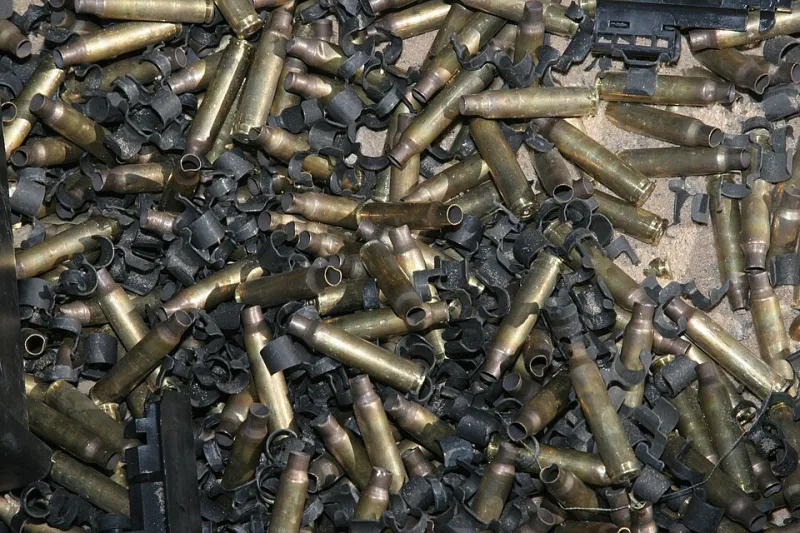
Photo: Unknown, Public domain, via Wikimedia Commons
The Day the Brass Stopped Coming
It didn't happen all at once. Ask any serious Southern reloader and they'll tell you the same story — shelves thinned out slow, then all of a sudden they were bare. Primers were first, then powder, then brass. And when the brass went, a lot of folks figured they'd just wait it out.
Bobby Tanner didn't wait. The Gadsden, Alabama reloader had been handloading his own ammunition for close to twenty years when the shortage hit, and he'd stockpiled enough components to keep going for a while. But watching the market stall out, he made a decision that changed how he thought about the whole operation.
"I started treating every piece of brass like it was the last one I'd ever see," Tanner says. "Because for a while there, it practically was."
What followed wasn't panic buying or price gouging. It was ingenuity — the kind the South has always been good at when necessity kicks in.
Sorting, Sizing, and Starting Over
The foundation of any good reclaiming operation is sorting, and that's where most newcomers underestimate the work involved. Spent casings pulled from a range floor or a buddy's brass bucket aren't ready to load. They're a mixed bag — different calibers, different manufacturers, different levels of wear, and sometimes genuine damage that makes them unsafe to reload.
Experienced reloaders like Tanner have developed systems that would make a quality control manager jealous. Caliber-specific bins, visual inspection under a magnifying lens, and a dedicated depriming stage before any cleaning happens. The goal is to catch cracked necks, split case mouths, and thinned web areas before a bad casing ever sees a press.
"People skip the inspection step and that's where they get into trouble," says Deanna Polk, who runs a small reloading supply and consultation business out of Macon, Georgia. "A cracked case doesn't always look cracked. You've got to handle every one."
Polishing tumbles — both dry corn cob and wet stainless steel pin methods — have become central to the reclaiming process. Clean brass feeds better, inspects easier, and extends die life. Southern reloaders have largely settled on wet tumbling for heavily fouled range pickups, citing superior cleaning inside the case mouth and primer pocket where residue builds up worst in humid conditions.
The Economics of Going Back to the Well
Here's where the math gets interesting. New brass, when you can find it, runs anywhere from thirty to sixty cents per casing depending on caliber. Reclaimed brass — properly sorted, cleaned, and annealed — costs a fraction of that. For high-volume shooters burning through thousands of rounds a season, the difference isn't pocket change. It's the difference between keeping a practice schedule and cutting it in half.
Annealing, the process of heat-treating case necks to restore ductility after multiple firings, has seen a surge of interest across Southern reloading communities. Once considered an advanced technique reserved for precision long-range shooters, it's now common practice among hunters and competitive shooters who want to squeeze maximum life from every casing.
"I'm getting eight, nine, ten reloads out of my .308 brass now," says Marcus Webb, a competitive shooter and reloader based outside of Knoxville, Tennessee. "Anneal every three loads, full-length resize when it needs it, and I've got casings that are still going strong."
For small operations that have grown beyond personal use, the economics scale up quickly. Polk's Macon business processes and resells reclaimed brass to local reloaders who want sorted, cleaned, ready-to-load casings without doing the work themselves. It's a niche, but it's a profitable one — and it fills a gap that commercial suppliers largely ignore.
Environmental Upside Nobody's Talking About
The conservation angle doesn't get enough airtime in reloading circles, but it deserves mention. Brass is a finite resource. Mining and refining copper and zinc — the primary components — carries a real environmental cost. Every casing that gets reclaimed and reloaded is one that doesn't require new raw material extraction.
For a region that takes land stewardship seriously, that matters. Southern hunting culture has always operated on a principle of using what you take and wasting nothing. Applying that same ethic to ammunition components is a natural extension, not a stretch.
"We talk about conservation when it comes to game and habitat," Webb points out. "Brass is just another resource. Why would you treat it different?"
Building Small Operations From the Ground Up
What started as survival tactics during the shortage has evolved into something more structured for a handful of Southern reloaders. Small-batch processing operations — not full commercial manufacturers, but something beyond pure hobby — have emerged in garages and outbuildings across the region.
These micro-operations typically serve local shooting clubs, ranges, and word-of-mouth networks. They're not competing with major suppliers. They're filling a local gap, keeping money in the community, and building the kind of trust that comes from knowing exactly who processed the brass in your cartridge.
The regulatory landscape for selling reloaded ammunition is complex and varies by state, which keeps most of these operations in the business of selling processed components rather than finished rounds. But the model works, and it's growing.
Tanner has no plans to go commercial. But he's taught the process to six people in his county over the past two years, and two of them have started their own small sorting operations. That's how Southern trades spread — not through corporate training programs, but through neighbors teaching neighbors.
"The shortage was bad," he says, leaning back in his shop chair. "But I'll tell you what — it made us better. Made us think harder about every piece of brass we touch."
That's a lesson worth keeping, shortage or not.